

Meta Description: Learn how to invest in ETFs and index funds in 2026 with this beginner-friendly guide. Discover how they work, their benefits, risks, costs, and strategies to build long-term wealth through passive investing.
Focus Keyword: Investing in ETFs and Index Funds in 2026
Introduction: The Smart Investor’s Shortcut to Building Wealth
For decades, successful investing seemed complicated.
Many people believed they needed advanced financial knowledge, expensive advisors, or hours of research to achieve good investment returns. Picking winning stocks, analyzing company reports, and timing the market appeared to be the only path to wealth creation.
However, the investing landscape has changed dramatically.
In 2026, millions of investors around the world are building wealth through a simpler approach: ETFs and Index Funds.
These investment vehicles have transformed investing by making diversification, low costs, and long-term growth accessible to almost everyone. Whether you’re a college student investing your first $100, a young professional building retirement savings, or someone looking for a straightforward investment strategy, ETFs and index funds offer one of the easiest ways to participate in global financial markets.
The popularity of passive investing continues to grow rapidly. In many major markets, index-based investing now manages trillions of dollars in assets and attracts billions in new investments every month. Investors increasingly recognize that consistently beating the market is difficult, while capturing market growth through diversified funds has historically proven effective over long periods.
The result is a financial revolution: ordinary individuals can now own hundreds or even thousands of companies through a single investment.
Understanding ETFs and index funds may be one of the most valuable financial skills you can develop in 2026.
Why ETFs and Index Funds Are More Popular Than Ever
Several factors have contributed to the explosive growth of passive investing:
Lower Costs
Traditional actively managed funds often charge higher management fees.
Index funds and ETFs generally have significantly lower expenses because they simply track an index rather than employing teams of analysts to pick stocks.
Greater Accessibility
Modern investing platforms allow investors to start with relatively small amounts.
Many brokers now offer:
- Fractional investing
- Commission-free trading
- Automated investing options
- Mobile investing apps
Consistent Long-Term Results
Research has repeatedly shown that many actively managed funds struggle to outperform major market indexes consistently over long periods.
This has encouraged investors to embrace passive strategies.
Simplicity
Investors no longer need to research hundreds of companies individually.
One fund can provide exposure to entire markets.
What Is an ETF?
ETF stands for Exchange-Traded Fund.
An ETF is a collection of investments packaged together into a single fund that trades on a stock exchange.
Think of it as a basket containing many different assets.
An ETF may include:
- Stocks
- Bonds
- Commodities
- Real estate investments
- International securities
When you buy one share of an ETF, you effectively own a small portion of all the investments inside that basket.
Example of an ETF
Suppose an ETF tracks the largest 500 companies in the United States.
Instead of purchasing shares individually in hundreds of companies, you can buy one ETF that provides exposure to all of them simultaneously.
Benefits include:
- Diversification
- Reduced risk
- Simplicity
- Lower costs
What Is an Index Fund?
An index fund is an investment fund designed to replicate the performance of a specific market index.
Examples include:
- S&P 500 Index
- Nasdaq-100 Index
- FTSE 100
- MSCI World Index
The goal is not to outperform the market.
The goal is to match the market’s performance as closely as possible.
Because index funds follow predetermined rules, they generally require less management and lower fees.
ETF vs. Index Fund: What’s the Difference?
Many beginners confuse ETFs and index funds because both often track indexes.
The key difference lies in how they are traded.
| Feature | ETF | Index Fund |
|---|---|---|
| Trading | Bought and sold during market hours | Purchased at end-of-day price |
| Pricing | Changes throughout the day | Calculated once daily |
| Minimum Investment | Often very low | May require minimum investment |
| Flexibility | High | Moderate |
| Popularity | Extremely high in 2026 | Still widely used |
Both can be excellent long-term investment choices.
Why Diversification Matters
One of the biggest advantages of ETFs and index funds is diversification.
Diversification means spreading investments across multiple assets rather than relying on a single company or sector.
Imagine two investors:
Investor A
Invests all money into one stock.
Investor B
Invests in an ETF containing 500 companies.
If one company performs poorly:
- Investor A may suffer major losses.
- Investor B experiences limited impact because risk is spread across many businesses.
Diversification helps reduce company-specific risk while maintaining exposure to market growth.
Understanding Compound Growth
One reason ETFs and index funds are effective wealth-building tools is their ability to benefit from compound growth.
The concept can be represented as:
This formula illustrates how investments grow when returns generate additional returns over time.
For investors, the key lesson is simple:
The earlier you start investing, the more time compounding has to work.
Even small monthly contributions can potentially grow significantly over decades.
Types of ETFs and Index Funds in 2026
Investors now have access to thousands of options.
The most common categories include:
1. Broad Market Funds
These track large sections of the stock market.
Examples:
- Total market funds
- S&P 500 funds
- Global equity funds
Suitable for most beginners.
2. International Funds
These provide exposure to companies outside your home country.
Benefits:
- Geographic diversification
- Exposure to global growth
- Reduced concentration risk
3. Bond Funds
Bond funds focus on fixed-income securities.
They typically offer:
- Lower volatility
- Regular income
- Portfolio stability
Many investors use bond funds to balance stock exposure.
4. Sector ETFs
These focus on specific industries such as:
- Technology
- Healthcare
- Energy
- Financial services
- Artificial Intelligence
While potentially rewarding, they are generally less diversified than broad-market funds.
5. Dividend ETFs
Dividend-focused funds invest in companies that regularly distribute profits to shareholders.
These funds appeal to investors seeking:
- Income generation
- Long-term stability
- Dividend reinvestment opportunities
How to Start Investing in ETFs and Index Funds
For beginners, the process is straightforward.
Step 1: Define Your Goals
Ask yourself:
- Retirement planning?
- Wealth building?
- Passive income?
- Education funding?
Goals influence investment decisions.
Step 2: Build an Emergency Fund First
Investing should generally come after establishing emergency savings.
Unexpected expenses should not force you to sell investments prematurely.
Step 3: Open an Investment Account
Choose a regulated brokerage platform offering:
- Low fees
- Easy account management
- Broad ETF selection
- Educational resources
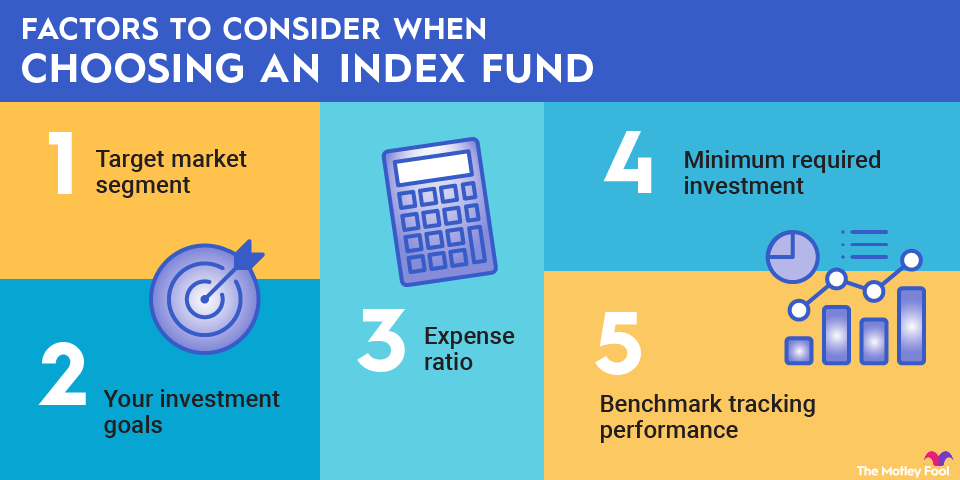
Step 4: Choose a Diversified Fund
Many beginners start with broad-market index funds because they offer extensive diversification.
Simplicity often outperforms complexity.
Step 5: Invest Consistently
Successful investing is more about consistency than perfection.
Regular contributions often matter more than attempting to predict market movements.
Common Mistakes New Investors Make
Even simple investment strategies can be undermined by poor decisions.
Trying to Time the Market
Many investors wait for the “perfect moment.”
Unfortunately, predicting short-term market movements is extremely difficult.
Chasing Trends
Buying investments solely because they are popular often leads to disappointment.
Long-term fundamentals matter more than short-term excitement.
Ignoring Fees
Small fees can significantly reduce returns over decades.
Always understand fund expenses.
Panic Selling
Market declines are normal.
Selling during temporary downturns can lock in losses.
Long-term investors typically focus on years rather than days.
Risks of ETFs and Index Funds
Although generally considered lower-risk than individual stock picking, ETFs and index funds are not risk-free.
Market Risk
If markets decline, fund values may decline as well.
Economic Risk
Recessions can impact broad market performance.
Interest Rate Risk
Bond funds can be affected by changing interest rates.
Concentration Risk
Sector-specific funds may be vulnerable to industry downturns.
Understanding risks helps investors maintain realistic expectations.
ETF and Index Fund Investing in 2026: Key Trends
Several developments are shaping passive investing:
AI-Powered Portfolio Management
Many platforms now use artificial intelligence to help investors build diversified portfolios.
Fractional Investing
Investors can purchase portions of ETF shares, making investing more accessible.
Automated Investing
Recurring investment plans help investors build wealth consistently.
Global Diversification
More investors are expanding beyond domestic markets to gain exposure to international opportunities.
Key Takeaways
- ETFs and index funds provide simple, diversified investment exposure.
- Passive investing remains one of the most popular wealth-building strategies in 2026.
- Diversification helps reduce company-specific risk.
- Lower fees can significantly improve long-term investment outcomes.
- Compound growth rewards investors who start early and remain consistent.
- Broad-market funds are often suitable starting points for beginners.
- Market timing is usually less effective than long-term investing discipline.
- Understanding risk is essential before investing.
- Regular investing habits often matter more than investment complexity.
- ETFs and index funds make professional-level diversification accessible to everyday investors.
Conclusion: Simplicity Is Often the Most Powerful Investment Strategy
Many new investors assume successful investing requires constant trading, market predictions, and complicated strategies.
History suggests otherwise.
For millions of investors, ETFs and index funds have provided an efficient path to long-term wealth creation by combining diversification, low costs, and simplicity. They remove much of the complexity that traditionally discouraged people from investing and make market participation accessible regardless of experience level.
The most successful investors are often not those who make the most trades or chase the latest trends. Instead, they are the individuals who invest consistently, remain patient during market fluctuations, and allow compound growth to work over time.
In 2026, ETFs and index funds continue to represent one of the most beginner-friendly and effective ways to start an investing journey. While no investment is guaranteed, understanding these powerful tools can help build a strong foundation for future financial success.
Disclaimer: This article is for educational and informational purposes only and should not be considered financial or investment advice. Always conduct your own research and consult a qualified financial professional before making investment decisions.
Tags: ETFs 2026 · Index Funds Guide · Beginner Investing · Passive Investing Strategy · ETF Investing for Beginners · Long-Term Wealth Building · Diversification Investing · Compound Growth Investing · Personal Finance 2026 · Smart Investing Guide