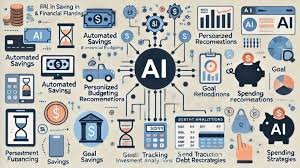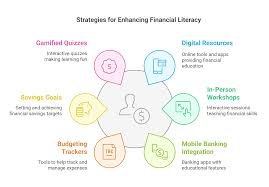



AI is transforming personal finance in 2026 — from smart budgeting and robo-advisors to agentic AI that autonomously manages your money. Discover the top tools, trends, statistics, and risks reshaping how individuals manage wealth, prevent fraud, and plan for the future.
Focus Keyword: AI personal finance management 2026
Introduction: Your Personal CFO Has Arrived — and It Never Sleeps
Not long ago, managing personal finances meant spreadsheets, monthly bank statements, and perhaps an annual meeting with a financial advisor if you were wealthy enough to afford one. For most people, financial planning was reactive — reviewing what had already happened rather than shaping what would happen next.
That era is over. In 2026, artificial intelligence has fundamentally transformed personal finance management — not as a futuristic promise, but as a present-day reality already embedded in the apps, banks, and investment platforms that hundreds of millions of people use every day. AI now categorizes your spending before you open your wallet, detects fraud before the transaction clears, rebalances your investment portfolio while you sleep, and gives personalized financial guidance that a decade ago would have required a wealthy client’s private banker.
The personal finance apps market reached $165.9 billion in 2025 and is projected to grow to $207.69 billion in 2026, expanding at a 25% compound annual growth rate through 2030 — one of the fastest-growing segments in all of fintech. AI powers 68% of finance apps for budgeting and investment advice. And perhaps most tellingly: apps that use AI-powered recommendations show 42% higher user retention than those that do not.
This is not incremental improvement. It is a structural transformation in how individuals manage, protect, grow, and think about their money.
$207B
Personal finance apps market in 2026 — growing at 25% CAGR to 2030
68%
Finance apps now powered by AI for budgeting and investment advice
42%
Higher retention for AI-recommendation apps vs. non-AI alternatives
70%
Reduction in fraud for apps using biometric AI verification
From Reactive to Predictive: The Evolution of AI Budgeting Tools
The first generation of personal finance apps — Mint, early YNAB, basic banking dashboards — were fundamentally backward-looking. They showed you where your money went after it was already gone. Category labels, monthly summaries, spending charts: useful, but reactive by design. The damage was already done by the time the insight appeared.
In 2026, the leading AI-driven finance platforms have made a qualitative leap. AI-driven finance platforms have evolved from simple expense trackers into predictive systems that model cash-flow behavior and spending risk. These tools increasingly use behavioral analytics to identify financial blind spots — such as lifestyle inflation or under-allocated savings categories — before they become problems rather than after.
The breakthrough concept is contextual budgeting. Instead of simply labeling expenses, advanced AI systems connect spending to goals, investments, and debt strategy. A purchase is not just categorized as “dining” — it is evaluated in the context of whether it moves you closer to or further from your stated goal of saving a house down payment by a specific date. The AI does not just record; it interprets, forecasts, and advises.
Tools like Monarch Money and Cleo use AI to identify trends, flag unusual activity, and forecast cash flow — with Monarch’s contextual engine connecting individual transactions to long-term financial plans rather than treating each purchase in isolation. YNAB’s AI layer has deepened its famous “zero-based budgeting” methodology with predictive cash flow modeling that anticipates month-end shortfalls before they occur. And a new generation of proactive intervention tools — like Whistl — goes further still, blocking or flagging impulse purchases before they are executed rather than reporting them afterward.
The shift from notification to prevention
The most significant behavioral design change in AI budgeting in 2026 is the shift from notification to prevention. Earlier apps sent alerts after overspending occurred: “You’ve exceeded your dining budget this month.” Modern AI finance tools intervene at the point of decision: “This purchase would leave you $47 short of your savings target this week — would you like to proceed?”
This shift from informing to intervening represents a fundamental change in the human-AI relationship around money. The AI is no longer a scorekeeping system; it is a decision-support partner that operates in real time at the moment choices are made.
Agentic AI: The Biggest Shift in Personal Finance Since Online Banking
If predictive budgeting represents the evolution of personal finance tools, agentic AI represents a revolution. The distinction is critical: predictive AI tells you what to do; agentic AI does it for you.
Agentic AI has moved from pilot to enterprise-wide deployment in 2026 — with the technology evolving from answering questions to taking actions: accessing systems, making decisions, and executing tasks autonomously. At Lloyds Banking Group, which manages over 21 million mobile app customers, 2026 has been formally designated the year agentic AI becomes “not just available, but indispensable.”
In practical personal finance terms, agentic AI means:
- Automatic bill payment optimization — AI agents schedule payments to maximize float, capture early-payment discounts, and avoid late fees without requiring manual instruction.
- Dynamic savings allocation — An AI agent monitors your cash flow in real time and automatically moves surplus cash into high-yield accounts or investment vehicles when your balance exceeds a threshold.
- Real-time portfolio rebalancing — AI wealth management platforms rebalance portfolios daily in response to market shifts, personal goal updates, and tax considerations — not quarterly at the advisor’s discretion.
- Proactive subscription management — AI agents identify unused subscriptions, negotiate better rates with service providers, or cancel services on the user’s behalf.
- Autonomous tax optimization — AI agents track tax-loss harvesting opportunities continuously, executing the necessary trades within minutes of a threshold being crossed rather than at year-end.
Finastra’s research indicates that agentic AI will drive a 20% increase in operational efficiency for banks, while banks that leverage AI earn a 15% greater share of the market. For individual consumers, the implication is that an always-on AI relationship manager is becoming the standard — not the premium — expectation for financial services.
The agentic AI imperative: According to a Forrester survey of 559 global technology and business leaders, 70% of respondents anticipate using agentic AI to deliver tailored financial advice that was previously available only to high-net-worth individuals. The democratization of expert-level financial guidance is the most socially significant implication of AI in personal finance.
Hyper-Personalized Wealth Management: The Democratization of Private Banking
For most of modern financial history, truly personalized financial advice — the kind that accounted for your specific tax situation, life goals, risk tolerance, estate planning needs, and investment preferences — was available only to the wealthy. Private banks set minimums of $1 million or more. Financial planners charged $300 to $500 per hour. Robo-advisors represented a step forward but still delivered largely generic portfolio construction based on simple risk questionnaires.
In 2026, generative AI platforms provide what is effectively ultra-high-net-worth-level financial guidance to the average saver. These AI wealth architects perform real-time portfolio rebalancing and tax-loss harvesting daily, reacting to global market shifts in milliseconds. They account for life stage transitions — job change, marriage, new child, approaching retirement — and adjust financial strategies dynamically rather than waiting for an annual review.
The comparison is striking: AI will serve as a personal CFO, offering guidance based on spending habits, transaction history, and lifestyle goals; providing predictive insights into future needs such as mortgages, retirement, and education funding; and delivering tailored investment suggestions aligned with individual risk profiles. None of this requires a minimum account balance. It requires only a smartphone and a willingness to connect your financial accounts.
Forty percent of finance apps now offer wealth management or robo-advisory tools — up from a small fraction just three years ago. The category boundaries between budgeting app, investment platform, and financial advisor are collapsing as AI makes all three capabilities available in a single integrated experience.
AI Fraud Detection and Security: Prevention at the Speed of Transaction
For individual consumers, the most immediately consequential application of AI in personal finance may not be budgeting or investing — it is security. Financial fraud has accelerated in sophistication and scale, but AI-powered fraud detection has kept pace in a way that previous rule-based security systems never could.
In 2026, AI security systems use behavioral biometrics — analyzing how you hold your phone, your typing cadence, the pressure of your finger on the screen, even your walking gait as detected by accelerometers — to authenticate identity continuously rather than relying on a single login event. This persistent behavioral authentication means that even if a fraudster obtains your password, the system recognizes within seconds that the behavioral signature does not match the account owner.
Biometric verification cuts fraud by 70% in financial apps that have adopted it. JPMorgan Chase’s AI fraud prevention system has saved nearly $1.5 billion in prevented fraudulent transactions in early 2026 alone — acting before transactions are authorized rather than flagging them after the fact. AI-powered first-contact resolution in retail banking exceeded 85% in February 2026 — meaning the majority of fraud-related customer inquiries are resolved instantly by AI without requiring human escalation.
The architectural shift in fraud detection is from reactive to agentic: systems that do not just detect fraud but actively coordinate defenses across disparate systems, converging fraud and anti-money laundering (AML) functions that were previously managed in separate silos. McKinsey’s research shows agentic AI driving productivity gains of 200% to 2,000% in compliance domains like KYC/AML by autonomously executing end-to-end workflows — a figure that illustrates the scale of the transformation happening in financial crime prevention.
AI Credit Scoring: Fairer Access or Algorithmic Bias?
Traditional credit scoring — built on FICO models that have changed little in thirty years — has long been criticized for excluding millions of creditworthy individuals who lack the conventional credit history the models require. Young people with no credit history. Recent immigrants. People who pay everything in cash. The self-employed with variable income. None of these groups fit the model well, even when they are financially responsible.
AI-powered credit scoring in 2026 offers a genuinely different approach. Alternative data sources — utility payments, rental history, mobile phone payments, cash flow patterns from bank accounts, subscription payment consistency — can supplement or replace traditional bureau data to create a more complete picture of creditworthiness. AI can identify behavioral patterns in transaction data that correlate with repayment reliability more accurately than a simple three-digit score derived from a narrow data set.
The practical result is meaningful: AI-based credit models have demonstrably expanded credit access to underserved populations in multiple markets, enabling individuals who would have been declined under legacy models to access mortgages, small business loans, and consumer credit. Moving from basic automation to adaptive, real-time intelligence, financial institutions are improving onboarding accuracy and strengthening risk management simultaneously.
However, the bias risk in AI credit scoring is real and requires serious attention. If AI models are trained on historical lending data that reflects past discrimination — as most historical financial data does — the models can perpetuate and even amplify those biases at scale and at speed. Explainable AI (XAI) requirements — which require lenders to provide intelligible explanations for credit decisions — are an important safeguard, but they require regulators and institutions to enforce them rigorously.
The Robo-Advisor Matured: From Simple Allocation to Full Financial Planning
The first robo-advisors — Betterment and Wealthfront launched around 2010 — were a genuine innovation: low-cost, automated portfolio construction based on Modern Portfolio Theory, accessible to anyone with a small minimum investment. But they were limited in scope. You got a diversified ETF portfolio. What you did not get was tax planning, insurance analysis, estate considerations, social security optimization, or the kind of integrated advice that considers your entire financial picture.
The AI robo-advisors of 2026 have addressed most of these gaps. Modern platforms use AI to integrate investment management with tax strategy, insurance needs analysis, retirement income planning, and goal-based financial modeling in a single continuous experience. The best systems of 2026 provide automated portfolio management that adjusts to changing market conditions and personal circumstances, scenario simulation for major life decisions, and forward-looking financial projections — not just historical performance summaries.
The result is a category of tool that genuinely blurs the line between automated investing and human financial planning. For the majority of households whose financial complexity does not require a dedicated human advisor, AI-powered robo-advisors in 2026 represent a comprehensive and genuinely adequate solution.
AI Finance Capability   2023 State  2026 State  Key Improvement


Budgeting tools Reactive transaction categorization Predictive, contextual, goal-linked Prevention vs. notification

Robo-advisors   Basic ETF allocation    Full financial planning integration Tax, estate, insurance included

Fraud detection Rule-based post-transaction alerts  Behavioral biometrics, pre-authorization blocking   70% fraud reduction

Credit scoring  FICO-centric bureau data    Alternative data, behavioral analytics  Broader access, real-time decisioning

Agentic AI  Pilot / experimental    Enterprise-wide deployment  Actions executed autonomously

Personalization Risk-questionnaire based    Continuous behavioral learning  Private-banking quality for all
The Risks: What AI in Personal Finance Gets Wrong
The transformation is real and broadly positive — but it is not without risk. Several categories of concern deserve serious attention from consumers, regulators, and the institutions deploying these systems.
Explainability and trust
When an AI system declines a loan application, recommends selling a stock, or flags a transaction as suspicious, users deserve to understand why. The “black box” nature of advanced AI models — particularly deep learning systems — makes this genuinely difficult. The push toward Explainable AI (XAI) in financial services is a regulatory and ethical priority, but the gap between the complexity of these systems and the intelligibility of their outputs remains significant. Regulators demand transparency: banks will use XAI to show customers how decisions are made, from loan approvals to fraud alerts. But the technical challenge of making genuinely complex AI decisions legible to non-expert users has not been fully solved.
Data privacy and the surveillance economy of finance
The more comprehensive and accurate AI personal finance management becomes, the more intimate the data it requires. Transaction-by-transaction behavioral analysis, biometric profiles, location data, and continuous account monitoring create a detailed portrait of an individual’s life that extends far beyond what any previous financial service collected. The value proposition is real: better advice, better security, better outcomes. But the data collection required creates significant privacy exposure if systems are breached, if data is shared with third parties beyond user expectations, or if governments compel access.
Algorithmic bias and financial exclusion
AI credit models trained on biased historical data can perpetuate and scale that bias. AI fraud detection systems that perform well for the demographic profiles dominant in training data may produce disproportionate false positives for underrepresented groups. The democratization narrative of AI in personal finance is genuinely powerful — but its realization requires active governance to prevent AI from replicating and amplifying historical inequities in financial access.
Over-reliance and financial literacy erosion
As AI systems take on more autonomous management of financial decisions — automatically allocating savings, rebalancing portfolios, scheduling payments — there is a real risk that users disengage from understanding their own financial situation. Financial literacy is foundational to long-term financial health, and a generation that delegates all financial decisions to autonomous AI agents may find itself seriously exposed when those systems fail, change their terms, or are compromised.
The balance required: The ideal AI personal finance experience empowers users to make better decisions — not to disengage from making decisions at all. The best platforms in 2026 use AI to educate as they automate, surfacing the reasoning behind recommendations and building financial understanding alongside financial efficiency.
What to Look for When Choosing an AI Finance Tool in 2026
With the personal finance app market approaching $208 billion and hundreds of competing products, choosing the right AI finance platform requires clarity about your needs and criteria. Here is a practical evaluation framework:
- Scope of integration: Does the tool connect all your financial accounts — bank, credit cards, investment, retirement, mortgage — or does it operate on a subset?
- Advisory vs. execution: Does the AI recommend actions or execute them? For beginners, recommendation-based tools that build understanding are preferable. For experienced users comfortable with automation, agentic execution delivers more efficiency.
- Data privacy and sharing policies: What data does the platform collect, how long is it retained, and is it shared with or sold to third parties?
- Regulatory compliance: Is the platform operating within regulated financial advisory frameworks, or is it positioned as a general technology tool? The distinction matters for fiduciary protection.
- Explainability: When the AI makes a recommendation or takes an action, does it explain why in terms you can understand and evaluate?
- Human escalation path: For complex situations — major life events, unusual tax circumstances, estate considerations — is there a clear path to qualified human expertise?
Key Takeaways
- The personal finance apps market reached $165.9 billion in 2025 and is heading to $207.69 billion in 2026, growing at a 25% CAGR to 2030 — driven almost entirely by AI-powered capability expansion.
- AI now powers 68% of finance apps for budgeting and investment advice; apps with AI recommendations show 42% higher user retention.
- The shift from reactive to predictive budgeting — and from notification to prevention — is the defining behavioral design change of 2026 in personal finance tools.
- Agentic AI has moved from pilot to enterprise-wide deployment — with systems now autonomously executing financial actions rather than just recommending them.
- 70% of financial services technology leaders expect to use agentic AI to deliver private-banking-quality personalization to average consumers.
- AI fraud detection — driven by behavioral biometrics and pre-authorization intervention — has cut fraud by 70% in adopting apps; JPMorgan’s AI saved nearly $1.5 billion in prevented fraud in early 2026.
- AI credit scoring using alternative data is expanding financial access to underserved populations — but requires active governance to prevent algorithmic bias from scaling historical inequities.
- The key risks — explainability gaps, data privacy, algorithmic bias, and over-reliance — require both regulatory oversight and user engagement to manage effectively.
Conclusion: AI Is Not Replacing Financial Judgment — It Is Amplifying It
The most important thing to understand about AI’s transformation of personal finance in 2026 is what it is not. It is not replacing the need for financial judgment, financial literacy, or personal engagement with your money. What it is doing — at an accelerating pace and with rapidly expanding capability — is making high-quality financial guidance, smart automation, and robust security accessible to everyone, not just the wealthy.
The family managing a tight budget who can now get a proactive warning before an overdraft rather than a penalty after one. The first-generation wealth builder who can access robo-advisory quality investment management for the cost of a monthly coffee. The small business owner who can identify a fraudulent transaction in seconds rather than discovering it on a monthly statement. These are the real stories behind the market statistics.
The personal finance AI revolution is not happening to us — it is available to us. The individuals, families, and communities who engage with these tools thoughtfully, understand their capabilities and limitations, and use them to build financial understanding as well as financial efficiency, will be the primary beneficiaries of one of the most consequential technological transformations in the history of personal finance.
This article is for informational and educational purposes only. It does not constitute financial, investment, or regulatory advice. Consult a qualified financial advisor before making significant financial decisions.
Tags: AI Personal Finance 2026 · AI Budgeting Tools · Agentic AI Finance · Robo-Advisors 2026 · AI Fraud Detection Banking · Hyper-Personalized Wealth Management · Personal Finance Apps Market · Behavioral Biometrics · AI Credit Scoring · JPMorgan AI Fraud · Monarch Money · YNAB AI · Financial Technology 2026 · Fintech AI Trends · Explainable AI Finance